Collaborative Beta Testing: Why It's the Future of Indie Development
The Android app development ecosystem is changing rapidly. With Google Play's new requirements for Closed Testing and growing competition in the store, independent developers need to find smart ways to validate and launch their applications.
Collaborative beta testing emerges as one of the most innovative and effective solutions for this challenge. But what is it exactly, and why are so many developers adopting it?
What Is Collaborative Beta Testing?
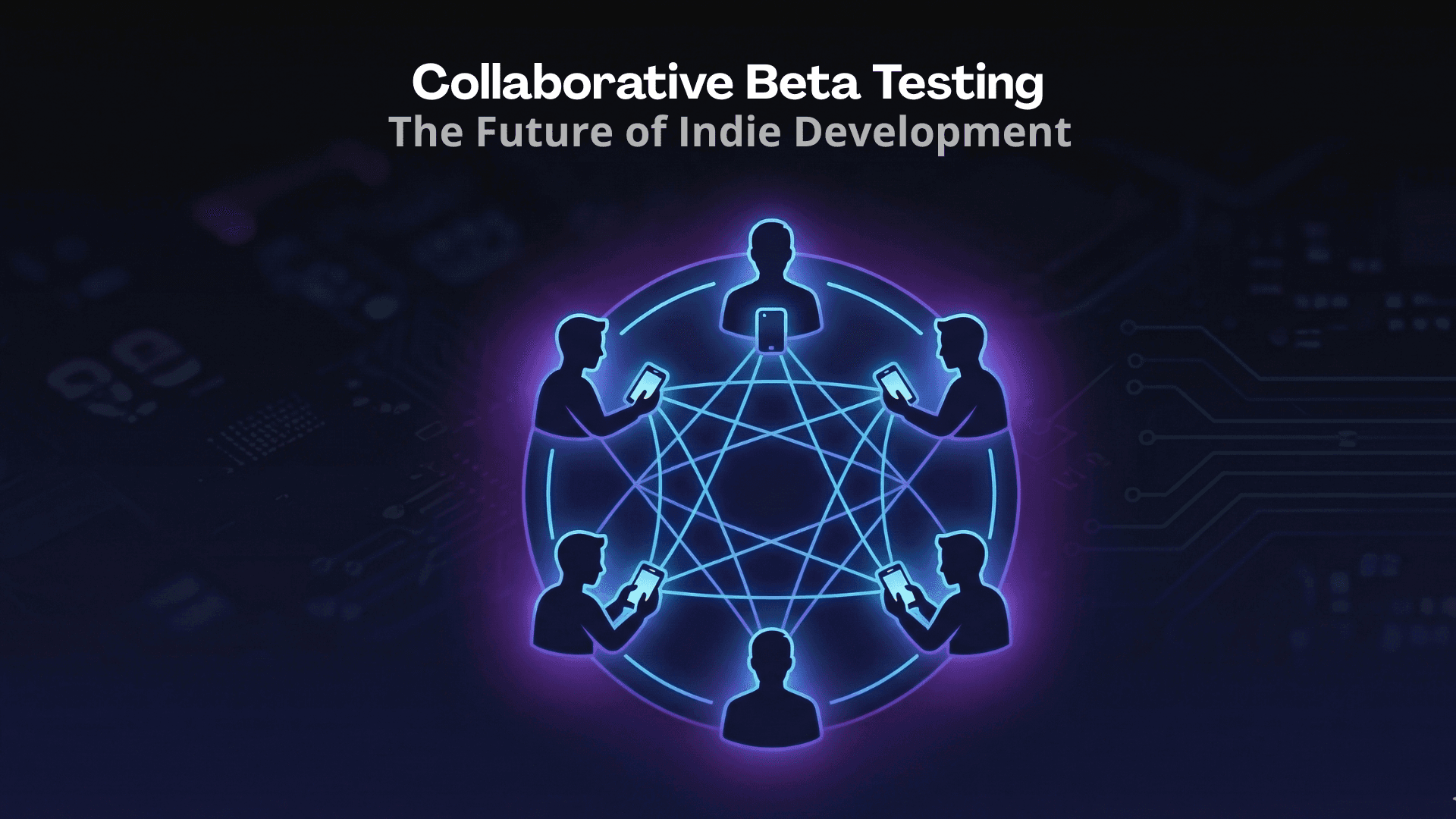
Collaborative beta testing is a model where developers help each other test their applications. Instead of looking for testers individually (which is difficult and expensive), developers join a community where everyone contributes by testing others' apps in exchange for receiving testers for their own application.
It's a system based on reciprocity: if I test your app, you test mine. Everyone wins.
The Problem with Traditional Testing
Before discussing the advantages of collaborative testing, let's look at why traditional methods fail:
1. Testing with Friends and Family
It's every indie developer's first option, but it has serious limitations:
- Bias: Your friends probably won't give you honest feedback
- Commitment: It's hard to get 20 people from your circle to use your app every day for 14 days
- Diversity: Your personal network probably doesn't represent the real diversity of your app's users
2. Bot Services
Some services offer "testers" that are actually bots or automated accounts. This is:
- Illegal according to Google Play policies
- Risky: Google can detect non-genuine activity and permanently suspend your developer account
- Useless: You don't get real feedback about your app
3. Hiring Testers
Hiring professional testers is a valid but expensive option, especially for indie developers with limited budgets. Professional QA services can cost from $50 to $200 per hour.
Why Collaborative Beta Testing Works
Genuine Motivation
When a developer tests another developer's app, they understand the importance of doing it well because they themselves need someone to do the same for their app. This reciprocity creates a natural incentive for quality testing.
User Diversity
A collaborative beta testing community includes developers from different countries, with different devices, Android versions, and usage habits. This gives you a much more representative sample of your future users.
Affordable Cost
The collaborative model can be completely free. You exchange your time testing others' apps for the benefit of having others test yours. For indie developers without a budget, this is a huge advantage.
Valuable Feedback
Other developers are exceptional testers because they understand technology, can identify bugs more easily, and can provide constructive technical feedback. A developer will notice things that a casual user might overlook.
How It Works in Practice
Let's use TesterSPlay as an example of a collaborative beta testing platform:
- Developer A publishes their app on the platform
- Developers B, C, D... (up to 20) commit to testing Developer A's app
- In return, Developer A also tests apps from B, C, D...
- Everyone uses the apps mutually for 14 days
- At the end of the period, all apps meet Google Play's Closed Testing requirement
Verification Systems
For collaborative testing to work, you need mechanisms that ensure testers are actually using the apps. On TesterSPlay, for example:
- Testers must submit a daily verification video showing they're using the app
- The system tracks each tester's activity
- Inactive testers are automatically expelled after 3 days without activity
- A reputation system penalizes those who don't follow through and rewards responsible testers
Comparison: Collaborative Testing vs. Other Options
| Aspect | Friends/Family | Bots | Paid Testers | Collaborative |
|---|---|---|---|---|
| Cost | Free | $5-50 | $200+ | Free or low |
| Risk | Low | Very high | Low | Low |
| Testing quality | Variable | None | High | High |
| Feedback | Biased | None | Professional | Technical |
| Policy compliant | Yes | No | Yes | Yes |
| Scalability | Low | High (but risky) | Medium | High |
The Impact on the Indie Community
Collaborative beta testing doesn't just solve a practical problem — it also builds community. When developers help each other:
- Professional connections are created
- Knowledge about development best practices is exchanged
- Innovation is fostered by seeing how other developers solve similar problems
- The feeling of isolation that many indie developers experience is reduced
Challenges of the Collaborative Model
Not everything is perfect. Collaborative beta testing has its challenges:
- Trust: You need to trust that other developers will fulfill their part
- Time: Testing others' apps requires a daily commitment
- Variable quality: Not all testers will provide the same level of feedback
However, these challenges are mitigated by robust verification systems, reputation tracking, and clear rules.
The Future of Beta Testing
As more developers discover the advantages of collaborative testing, we're likely to see:
- More platforms specializing in collaborative beta testing
- Integration with CI/CD tools to automate parts of the process
- Expansion to other ecosystems like iOS and web apps
- Mentorship programs where experienced developers guide newcomers
Conclusion
Collaborative beta testing represents a paradigm shift in how independent developers launch their apps. In a world where Google Play keeps raising the bar for publishing, peer collaboration is the smartest and most sustainable answer.
If you're an indie developer about to publish your first app, we invite you to explore the collaborative model. You'll get real testers, valuable feedback, and along the way, you'll meet other developers who share your passion.
The future of indie development is collaborative. Are you ready to be part of it?
Share this article